What Documents Do You Need for Your 2025/26 Self Assessment Tax Return?
Tax Return Time? Get Your Documents Ready
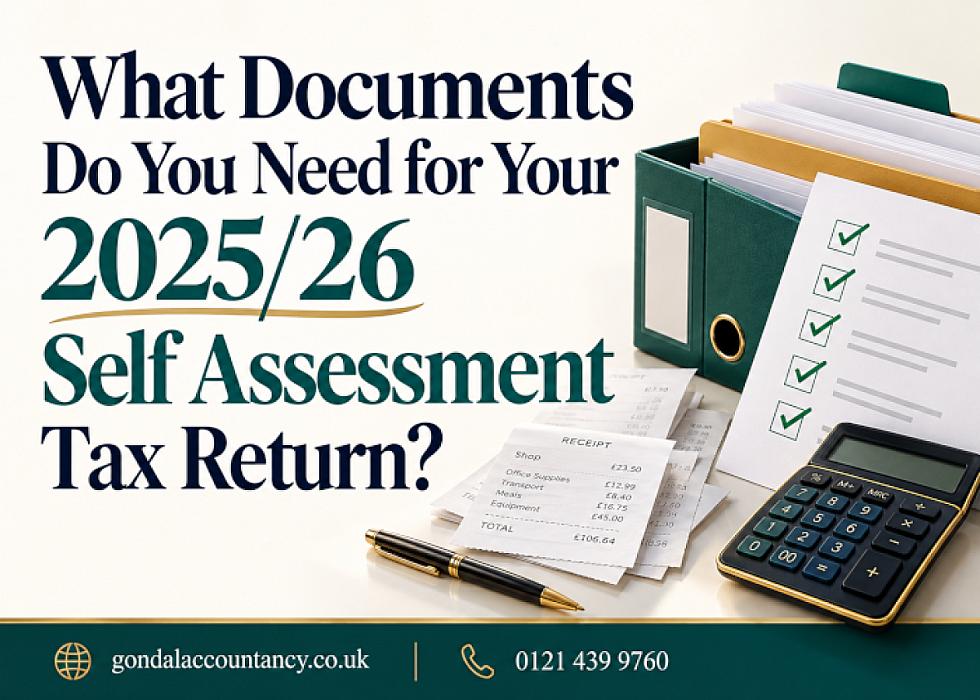
You sit down to sort out your tax return, then realise your P60 is somewhere in your emails, a few receipts are missing and you are not sure which bank statements your accountant needs.
It is a familiar situation. Gathering the paperwork often takes longer than expected, particularly if you have more than one source of income.
For the 2025/26 tax year, covering 6 April 2025 to 5 April 2026, the documents you need will depend on your circumstances. Someone with employment income and dividends will need a different set of records from a landlord or self-employed tradesperson.
This checklist will help you get organised before preparing your return or sending your records to your accountant.
When does your 2025/26 tax return need to be submitted?
The standard deadline for submitting your online Self Assessment tax return is 31 January 2027. This is also the usual deadline for paying any remaining tax due for 2025/26, together with your first payment on account where applicable.
If you submit a paper return, HMRC must normally receive it by 31 October 2026.
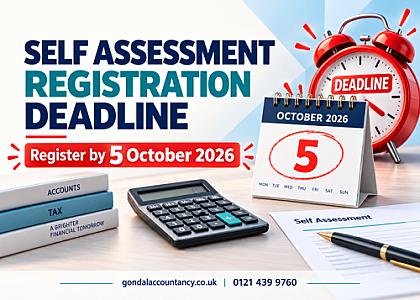
If you need to register or reactivate Self Assessment for the year, the notification deadline is 5 October 2026. Some people receive a different filing deadline, so check any notice HMRC has sent you. GOV.UK
Our Self Assessment registration deadline guide explains what to check if you are filing for the first time.
Start with your personal tax details
Before looking through your income and expenses, gather the information that identifies you to HMRC:
- Your full name, current address and date of birth.
- Your personal Unique Taxpayer Reference, usually called your UTR.
- Your National Insurance number.
- Any HMRC letters about your tax return.
- Your previous tax return and tax calculation, if available.
- Details of Self Assessment payments already made.
If you are a company director, make sure you provide your personal UTR. Your company’s Corporation Tax UTR is a separate reference.
It also helps to tell your accountant what has changed during the year. Starting a business, leaving a job, receiving rental income or selling an investment may affect the information they need.
If you were employed during the year
Gather your P60, any P45s from jobs you left and relevant payslips. If your employer provided taxable benefits, include your P11D where one was issued, or the information supplied about benefits taxed through payroll.
Had more than one job? Include records for each employer.
Company directors should also gather dividend vouchers and details of dividends received. Keeping salary and dividend records together makes it easier to review both sources of income. HMRC’s preparation checklist includes employment records, pension statements and details of other income. a 10 point step-by- ...
If you are self-employed
Your accountant needs a clear picture of what your business earned and what it spent. Useful records include:
- Sales invoices and records of cash income.
- Business bank statements.
- Statements from online marketplaces and payment providers.
- Receipts and invoices for business expenses.
- Mileage records and details of business vehicle use.
- Records of equipment purchases.
- Your bookkeeping spreadsheet, accounting software records or accounts.
Bank statements are useful, but they do not always explain a transaction. A payment to a retailer, for example, may not show whether you bought business equipment or something for personal use.
Flag any mixed business and personal spending, and explain transfers between your own accounts so they are not confused with customer payments.
The records needed also depend on your accounting method. If you use traditional accounting, your accountant may need unpaid sales invoices, outstanding bills and stock information at your accounting year end. GOV.UK
For a closer look at record keeping, read our guide to the records sole traders should keep for HMRC.
If you receive rental income
Organise your paperwork by property, particularly if you own more than one. A useful starting point is:
- Rent records and letting-agent statements.
- Bank statements showing rental payments.
- Invoices for repairs, maintenance and other property costs.
- Mortgage interest statements.
- Details of ownership and any changes during the year.
Tell your accountant if a property is jointly owned, was used personally, or was bought or sold during the year.
For work carried out at a property, include the invoice or a description of the work. A total taken from a bank statement may not give your accountant enough information to assess its tax treatment.
Our landlord accounting service can help you organise your rental records and prepare your return.
If you work under CIS
Construction subcontractors should keep their CIS payment and deduction statements together with their business income and expense records.
Organise the statements by contractor and highlight any missing months. It is much easier to identify a gap when the records are grouped together than when individual statements are scattered across messages and emails.
If you need help reviewing the paperwork, our CIS accountants can explain what is needed.
Remember income outside your main job or business
It is easy to focus on your main earnings and overlook other records. Depending on your circumstances, your accountant may also need:
- Bank and building society interest summaries.
- Dividend statements and investment tax certificates.
- Private pension statements and State Pension details.
- Information about partnership income.
- Overseas income records and foreign tax paid.
- Purchase and sale records for assets such as shares or property.
If you are unsure whether something belongs on your return, mention it. Your accountant can check its treatment once they have the details. HMRC includes savings, pensions, overseas income and asset disposals in its guidance on preparing for Self Assessment. a 10 point step-by- ...
Gather pension contribution and Gift Aid records
Pension contributions are worth checking carefully. Provide statements showing what you paid, any tax relief added by the provider and whether contributions were made personally or through your employer.
The way tax relief works depends on the pension arrangement. Your accountant needs this information to check whether further relief is available and avoid claiming relief that has already been given. GOV.UK
Also gather the dates and amounts of any Gift Aid donations you made.
What should you do if documents are missing?
Start with what you have, then make a short list of the gaps.
You may be able to download replacement bank statements, ask your employer for missing employment information or request copies from your pension provider, letting agent or contractor.
Let your accountant know early. There is no need to delay the first conversation until every document has been found, but missing or uncertain figures need to be addressed before the return is finalised.
A simple folder labelled “Tax Return 2025/26” is often enough to get started. Divide it into employment, business income, expenses, property, investments and HMRC correspondence. Give files clear names so you can find them again.
Frequently asked questions
Do I need to send my receipts to HMRC?
You do not normally send your self-employed business records with your tax return. You must keep them to support the figures and provide them if HMRC asks. Your accountant may need to review them when preparing your return. GOV.UK
Are bank statements enough?
They are a useful starting point, but supporting invoices, receipts and income statements help explain the transactions. Let your accountant know if these are unavailable.
How long should I keep self-employed tax records?
HMRC normally requires you to keep them for at least five years after the relevant 31 January filing deadline. For a 2025/26 return submitted on time, that means keeping them until at least the end of January 2032. Longer periods can apply in some circumstances. gov.uk
Do I need every document listed in this guide?
No. Use the sections that match your circumstances. If you only have employment income and dividends, for example, the rental property and self-employed business checklists may not apply.
Need help getting your tax return ready?
You do not have to work out every requirement before speaking to an accountant. Start by explaining your income sources and sharing the records you already have.
Gondal Accountancy helps individuals in Birmingham and across the UK prepare and submit their Self Assessment tax returns. We can explain which documents are needed, review your information and help you understand the figures before filing.
Call 0121 439 9760 or contact Gondal Accountancy to discuss your 2025/26 tax return.
Disclaimer
The content of this blog is provided for general information purposes only and should not be treated as tax, accounting, legal or financial advice. Tax rules, accounting requirements, legislation, regulations and official guidance can be complex and may change over time. As a result, some information in this article may become outdated, incomplete or no longer applicable after the date of publication.
The application of any tax, accounting or legal rule will depend on your individual or business circumstances. Before making any decision or taking any action based on the information in this article, you should seek advice from a suitably qualified tax professional, accountant, solicitor or financial adviser.
Gondal Accountancy and its staff accept no responsibility or liability for any loss, action taken, or decision made or not made as a result of relying on the information contained in this blog.