Self Assessment Registration Deadline 2026: Do You Need to Register by 5 October?
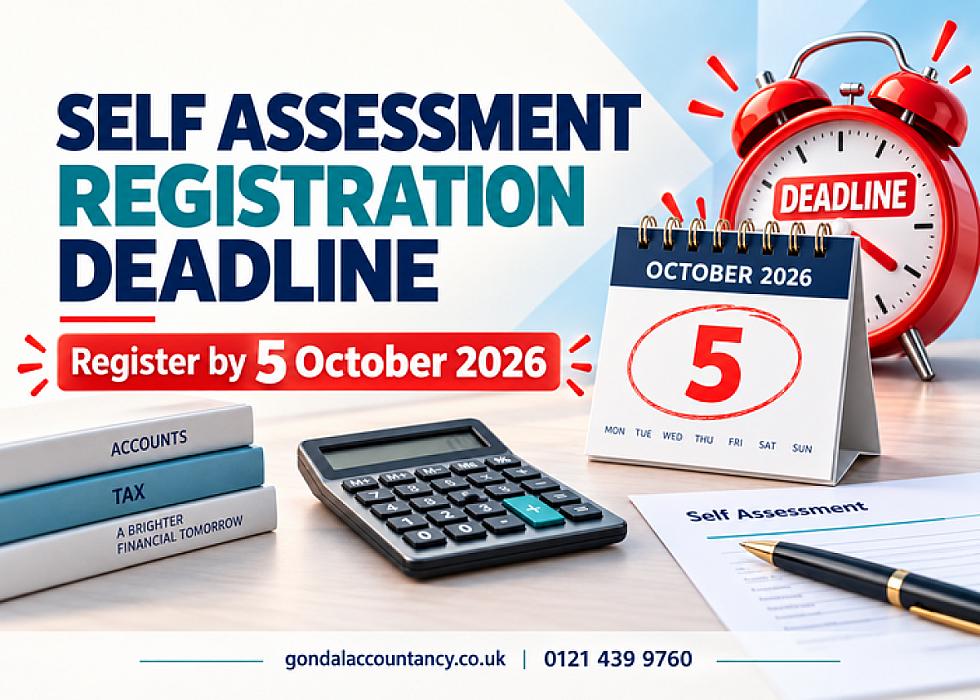
If you received untaxed income during the 2025/26 tax year and have not previously submitted a Self Assessment tax return, you may need to register with HM Revenue & Customs by 5 October 2026.
The deadline applies to the tax year that ran from 6 April 2025 to 5 April 2026. It may affect new sole traders, landlords, people with side-business income and others whose tax has not already been collected through PAYE.
Registering for Self Assessment does not mean that your tax return or tax payment is due on 5 October. However, registering on time gives HMRC an opportunity to issue your Unique Taxpayer Reference and allows you to prepare for the later filing and payment deadlines.
The important Self Assessment deadlines for 2025/26
The main dates are:
| Requirement | Deadline |
|---|---|
| Register for Self Assessment, if required | 5 October 2026 |
| Submit a paper tax return | 31 October 2026 |
| Submit online to request collection through PAYE, where eligible | 30 December 2026 |
| Submit an online tax return | 31 January 2027 |
| Pay tax due and any first payment on account | 31 January 2027 |
| Make the second payment on account, where applicable | 31 July 2027 |
HMRC must receive an online 2025/26 tax return and any tax due by 11.59 pm on 31 January 2027.
You can confirm the current dates in the official HMRC Self Assessment deadline guidance.
Who needs to register for Self Assessment?
You may need to register if, during the 2025/26 tax year, you:
- started working as a sole trader or became self-employed;
- received more than £1,000 in gross trading income before expenses;
- started receiving income from renting out a property;
- earned income through freelance, consultancy or contract work;
- received taxable income from an online or side business;
- became a partner in a business partnership;
- received foreign income that must be reported in the UK;
- made taxable capital gains;
- received other income on which sufficient tax was not deducted; or
- were asked by HMRC to complete a tax return.
This list is not exhaustive. Whether you must submit a return depends on the type and amount of income received, available allowances and your wider tax circumstances.
You can use HMRC’s online service to check whether you need to submit a Self Assessment tax return.
Do company directors automatically need to register?
Being a company director does not, by itself, automatically mean that you must submit a Self Assessment tax return.
A director may still need to register if they receive untaxed income, dividends, rental income, taxable benefits or gains that must be reported. The position should therefore be checked using the individual’s complete income information rather than their job title alone.
Does income from a side hustle need to be reported?
Income from activities such as freelance work, online selling, content creation, tutoring, delivery work, beauty services or other paid work may count as trading income.
The trading allowance can cover up to £1,000 of gross trading income in a tax year. The £1,000 test normally concerns income before deducting expenses, not the profit left after expenses.
Selling unwanted personal belongings does not automatically make someone a trader. However, regularly buying or producing goods to sell for profit can amount to trading. The facts and overall pattern of activity must be considered.
If you are unsure, read our guide to side-hustle tax and income from eBay, Vinted, TikTok Shop and Facebook.
What if you became a landlord?
You may need to register if you started receiving rental income during 2025/26.
The rules depend on your gross rental income, allowable property expenses and whether the property allowance applies. Landlords should retain records such as:
- rental statements and tenancy information;
- mortgage interest statements;
- letting-agent charges;
- repairs and maintenance invoices;
- insurance costs;
- service charges and ground rent; and
- professional and accountancy fees.
Personal expenditure and capital improvements are not normally deducted in the same way as day-to-day revenue expenses. It is therefore important to classify each cost correctly.
Gondal Accountancy provides specialist accounting and tax support for landlords.
How do you register for Self Assessment?
The correct registration process depends on why you need to submit a return.
If you are newly self-employed
You will normally register as a sole trader through GOV.UK. HMRC will use the information provided to register you for Self Assessment and, where applicable, National Insurance purposes.
If you need a return for another reason
If you are not self-employed but need to report rental income, untaxed income, capital gains or another liability, you should use the appropriate HMRC registration route.
If you previously submitted tax returns
You may not need a new UTR. If your Self Assessment record became inactive because HMRC did not require a return for a previous year, you may need to reactivate it.
The official starting point is HMRC’s Self Assessment registration service.
What information may you need?
Before registering, it can help to have the following available:
- your full legal name;
- current address and contact details;
- date of birth;
- National Insurance number;
- existing UTR, if you have one;
- the date your self-employment or other taxable activity began;
- the nature of your business or source of income; and
- details of any business partnership, where applicable.
HMRC may send your UTR or other registration information separately. Registering close to the deadline can leave less time to deal with missing details or account-access problems.
What happens after registration?
Once registered, you should:
- Keep complete records of your income and allowable expenses.
- Check that you can access your HMRC online account.
- Gather the information needed for the 2025/26 tax return.
- Calculate the likely tax and National Insurance liability.
- Check whether payments on account may apply.
- Submit the return by the relevant deadline.
- Pay the amount due by 31 January 2027.
You do not need to wait until January to submit your return. Filing earlier gives you more time to check the figures, plan for the bill and correct missing information.
Our Self Assessment accountants can assist with registration, record reviews, allowable expenses, preparation of the return and submission to HMRC.
What happens if you miss 5 October 2026?
If you realise after 5 October that you should have registered, do not wait until January. Register as soon as possible.
HMRC states that late registration may result in a failure-to-notify penalty if tax remains unpaid. The amount can depend on the tax due, how late the notification was and the taxpayer’s behaviour.
HMRC may give a person who registers late a separate filing deadline, but the tax due for 2025/26 must still normally be paid by 31 January 2027.
Missing the registration deadline does not remove the obligation to declare the income.
What are the penalties for filing or paying late?
The standard late-filing penalties can include:
- an initial £100 penalty;
- daily penalties of £10 after three months, up to £900;
- a further penalty after six months of 5% of the tax due or £300, whichever is greater; and
- another penalty after 12 months of 5% of the tax due or £300, whichever is greater.
Separate penalties and interest may apply where tax is paid late. Current details are available in the HMRC Self Assessment penalties guidance.
If you already have an outstanding return, our late tax return accountants can help establish what is due and bring your records up to date.
Will Making Tax Digital affect you?
Making Tax Digital for Income Tax is being introduced according to qualifying income.
People with qualifying self-employment and property income above:
- £50,000 for 2024/25 should have started using MTD from 6 April 2026;
- £30,000 for 2025/26 will need to use it from 6 April 2027; and
- £20,000 for 2026/27 will need to use it from 6 April 2028.
HMRC considers gross qualifying income from self-employment and property together. It is not based simply on the profit remaining after expenses.
If your 2025/26 qualifying income exceeds £30,000, preparing your tax return is also an opportunity to start planning for MTD from April 2027. Learn more about our Making Tax Digital accounting support.
Documents to start gathering now
Depending on your circumstances, useful records may include:
- invoices and sales records;
- bank and payment-platform statements;
- receipts for business expenses;
- employment P60s and P45s;
- CIS deduction statements;
- pension income documents;
- dividend vouchers;
- rental-income and property-expense records;
- savings and investment statements;
- details of asset disposals;
- student-loan information; and
- records of pension contributions or charitable donations.
Good records help ensure that income is reported accurately and that legitimate expenses and reliefs are not overlooked.
Do you need help registering or completing your return?
Gondal Accountancy helps sole traders, landlords and individuals across Birmingham and the wider UK with Self Assessment registration, tax returns and ongoing accounting support.
Starting early can provide more time to resolve missing records, understand the likely tax bill and avoid a last-minute rush before 31 January.
Call 0121 439 9760 or contact Gondal Accountancy to discuss your 2025/26 Self Assessment.
Frequently asked questions
Is 5 October the deadline for paying my tax?
No. For the 2025/26 tax year, the main online filing and payment deadline is 31 January 2027. The 5 October deadline concerns notifying HMRC and registering for Self Assessment where required.
Do I need to register again every year?
Normally, no. Once registered, you retain the same UTR. However, you may need to reactivate your Self Assessment record if HMRC previously stopped requiring returns.
Can an accountant register me for Self Assessment?
An accountant can assist with the registration process and act as your authorised tax agent. You will still need to provide accurate personal and income information.
What if I have lost my UTR?
Do not submit a second registration simply to obtain another UTR. Check your HMRC online account and previous correspondence or use HMRC’s UTR recovery process.
Can I file my tax return before January 2027?
Yes. The 2025/26 tax year ended on 5 April 2026, so the return can be prepared and submitted before January. Filing early does not normally mean that the tax must be paid earlier than its usual due date.
Is the £1,000 trading allowance based on profit?
No. The threshold normally concerns gross trading income before deducting expenses. Different rules and restrictions can apply, so individual circumstances should be checked.
Disclaimer
The content of this blog is provided for general information purposes only and should not be treated as tax, accounting, legal or financial advice. Tax rules, accounting requirements, legislation, regulations and official guidance can be complex and may change over time. As a result, some information in this article may become outdated, incomplete or no longer applicable after the date of publication.
The application of any tax, accounting or legal rule will depend on your individual or business circumstances. Before making any decision or taking any action based on the information in this article, you should seek advice from a suitably qualified tax professional, accountant, solicitor or financial adviser.
Gondal Accountancy and its staff accept no responsibility or liability for any loss, action taken, or decision made or not made as a result of relying on the information contained in this blog.