Side-Hustle Tax UK: Do You Need to Declare eBay, Vinted, TikTok Shop or Facebook Income?
A simple guide to when online selling becomes taxable and when selling your personal belongings does not need to be reported
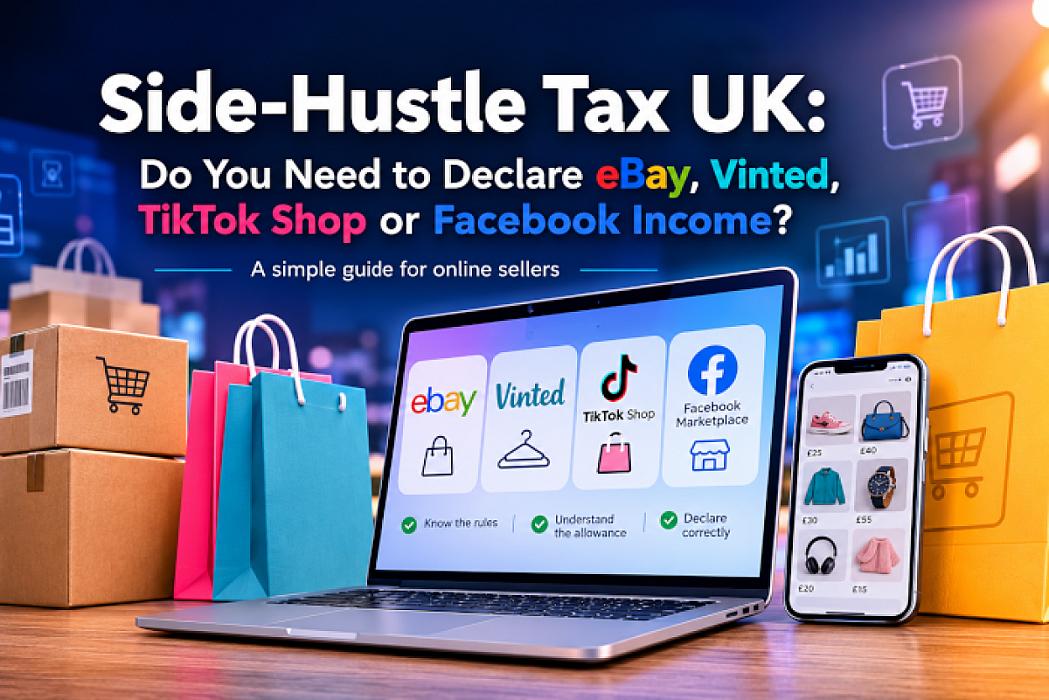
Selling online has become a popular way to earn extra money. You may sell unwanted clothes on Vinted, second-hand items on eBay, products through TikTok Shop or goods through Facebook Marketplace.
But does every online sale need to be declared to HMRC?
The simple answer is no. Selling your own unwanted belongings is usually different from regularly buying, making or sourcing goods to sell for profit.
The platform you use does not decide whether tax is due. HMRC looks at what you are doing, why you are selling and how much trading income you receive.
Are you selling personal belongings or running a side hustle?
This is the most important distinction.
Selling your unwanted personal belongings
You will not usually need to declare the money if you are simply selling personal items that you no longer want, such as:
- old clothes;
- shoes and accessories;
- children’s toys;
- furniture;
- kitchen equipment;
- mobile phones;
- computers; or
- unwanted household items.
These are items that you originally bought or received for your own personal use.
HMRC states that people clearing out unwanted belongings are unlikely to need to report the money or pay Income Tax, regardless of how many ordinary personal items they sell.
However, separate Capital Gains Tax rules may apply if you sell an individual valuable possession, or a qualifying set of possessions, for £6,000 or more. This may include jewellery, paintings, antiques, coins or stamps.
Buying or making goods to sell
You are more likely to be trading if you:
- buy products intending to resell them for a profit;
- regularly source clothes from charity shops to sell on Vinted;
- purchase items from wholesalers for your eBay shop;
- import goods to sell through TikTok Shop;
- make jewellery, crafts or personalised products;
- upcycle furniture to sell;
- sell digital products or downloads; or
- regularly promote and sell products through social media.
HMRC generally considers buying or making goods with the intention of selling them for profit to be trading rather than simply selling personal belongings.
Calling the activity a hobby does not automatically make the income tax-free. What matters is how the activity operates.
What is the £1,000 trading allowance?
Individuals can normally receive up to £1,000 of gross trading income in a tax year under the trading allowance.
The UK tax year runs from 6 April to 5 April.
Gross income means the total amount received before deducting costs such as:
- the original cost of the products;
- postage and packaging;
- platform fees;
- advertising;
- materials; or
- delivery costs.
If your total gross trading income is £1,000 or less, you will not usually need to tell HMRC about it.
If it is more than £1,000, you will normally need to inform HMRC and may need to register for Self Assessment.
This does not necessarily mean that you will pay tax on the full amount received. Tax is normally calculated after applying the appropriate trading allowance or allowable business expenses.
Is the £1,000 allowance available for every selling platform?
No. You do not receive a separate £1,000 allowance for eBay, Vinted, TikTok Shop and Facebook.
There is generally one trading allowance covering your combined trading and relevant side-hustle income for the tax year.
For example, income from the following activities may need to be added together:
- selling goods on eBay;
- reselling clothes on Vinted;
- selling through TikTok Shop;
- using Facebook Marketplace;
- creating online content;
- selling handmade goods;
- providing freelance services; and
- carrying out other self-employed work.
HMRC confirms that income from different trading activities must be combined when checking whether the £1,000 allowance has been exceeded.
Do the rules differ between eBay, Vinted, TikTok Shop and Facebook?
The same basic tax principles generally apply, but the way people use each platform may differ.
eBay
Occasionally selling unwanted household items on eBay will not normally be treated as trading.
However, you may be trading if you regularly:
- buy items to resell;
- hold stock;
- operate an eBay shop;
- sell large quantities of similar products; or
- aim to make a regular profit.
Vinted
Selling clothes from your own wardrobe will not usually need to be declared.
The position may change if you start buying clothes, shoes or accessories specifically to resell at a profit. Regularly sourcing stock from wholesalers, charity shops, clearance sales or car boot sales may indicate that you are trading.
TikTok Shop
TikTok Shop income may include:
- selling your own products;
- reselling products;
- receiving affiliate commission;
- receiving advertising or promotional income; or
- receiving gifts, free products or services in return for creating content.
HMRC states that income from content creation can include money, gifts and services received for promoting products. The value of non-cash payments may therefore need to be considered.
Facebook income may come from:
- selling through Facebook Marketplace;
- running a business page;
- receiving advertising or content income;
- selling through local groups; or
- promoting products and services.
Selling an unwanted sofa through Facebook Marketplace is different from regularly advertising and selling stock as a business.
Do online platforms report sellers to HMRC?
Digital platforms may collect and report information about sellers to HMRC.
The information collected can include a seller’s:
- name;
- address;
- date of birth;
- National Insurance number;
- number of transactions; and
- income received through the platform.
Platforms generally collect the information for each calendar year and report it to HMRC by the following January. They must also provide the seller with a copy of the information reported.
For sales of goods, a reporting exemption generally applies only where a seller makes fewer than 30 sales during the calendar year and receives less than €2,000, approximately £1,700, from those sales.
Does making 30 sales mean you owe tax?
No.
The platform reporting rules and the tax rules are not the same.
A platform reporting your details to HMRC does not automatically mean that:
- you are operating a business;
- your income is taxable;
- you have exceeded the trading allowance; or
- you owe HMRC money.
You could sell more than 30 low-value personal belongings without being a trader. Equally, someone could make fewer than 30 sales but still be trading if the goods were purchased specifically for resale.
HMRC confirms that platform reporting does not automatically create a tax liability.
Does the £1,700 platform reporting figure replace the £1,000 tax allowance?
No.
These are two separate figures used for different purposes.
The approximate £1,700 figure relates to whether certain sales information may be reported by a platform.
The £1,000 trading allowance relates to whether you may need to tell HMRC about trading or side-hustle income.
A platform not reporting your details does not remove your responsibility to declare taxable income. Similarly, a platform reporting you does not necessarily mean that you owe tax.
HMRC has also confirmed that the current requirement has not changed to £3,000. People receiving more than £1,000 of relevant gross side-hustle income must still check whether they need to report it.
Do you pay tax on your total sales?
Not necessarily.
Where you are trading, tax is generally based on your taxable profit rather than simply the total amount paid by customers.
You may normally choose between:
- deducting the £1,000 trading allowance from your income; or
- claiming your actual allowable business expenses.
You cannot normally use the full trading allowance and also deduct actual business expenses from the same income.
Allowable expenses for an online selling business may include:
- products purchased for resale;
- raw materials;
- postage and packaging;
- marketplace fees;
- payment-processing charges;
- advertising;
- business insurance; and
- certain office and accountancy costs.
The most suitable option will depend on the amount of your expenses and your individual circumstances.
What records should online sellers keep?
Even when selling through a platform, you should keep your own accurate records.
Useful records include:
- sales reports from each platform;
- purchase invoices for stock;
- postage and courier receipts;
- platform and payment-processing fees;
- refunds and returned orders;
- advertising costs;
- packaging costs;
- bank statements; and
- details of any free products, gifts or services received.
Remember that platforms may provide reports based on the calendar year, while UK tax reporting normally follows the tax year from 6 April to 5 April. You may therefore need to separate the transactions into the correct tax period.
Do not rely entirely on the figure provided by one platform, particularly if you use several marketplaces.
How do you tell HMRC?
If your gross trading income is more than £1,000 and you need to declare it, you may have to register as a sole trader and complete a Self Assessment tax return.
New taxpayers who need to submit a return should generally register by 5 October following the end of the relevant tax year.
The usual deadline for submitting an online Self Assessment return and paying the tax due is 31 January following the end of that tax year.
Registering for Self Assessment does not mean that you need to form a limited company. Many online sellers operate as sole traders.
What if you already have a full-time job?
Having a job and paying tax through PAYE does not automatically cover your online selling income.
If you are also trading through online platforms, it remains your responsibility to check whether the additional income needs to be declared.
Income from your employment and side hustle may both affect the overall amount of tax due, but side-hustle income will not normally appear automatically on your payslip.
What if you have not declared earlier income?
Do not ignore income from previous tax years.
HMRC may receive information directly from online platforms and compare it with the information included in your tax records.
If you should have declared trading income but did not do so, you should take advice and correct the position as soon as possible. Late registration, late tax returns and late payments can result in interest or penalties.
Coming forward voluntarily may place you in a better position than waiting for HMRC to contact you.
The main point
You do not normally need to declare money received from occasionally selling your own unwanted personal belongings.
However, you may need to tell HMRC if you regularly buy, make or source goods to sell for profit and your combined gross trading income is more than £1,000 during the tax year.
The rules apply across all platforms. Using several accounts or marketplaces does not provide a separate allowance for each one.
Platform reporting is also separate from your tax liability. Being reported does not automatically mean tax is due, and not being reported does not automatically mean the income can be ignored.
Need help with online selling and side-hustle tax?
Gondal Accountancy can help online sellers and content creators with:
- checking whether online activity is classed as trading;
- registering as a sole trader;
- preparing Self Assessment tax returns;
- reviewing platform sales reports;
- claiming allowable business expenses;
- correcting undeclared income from earlier years; and
- keeping suitable digital bookkeeping records.
Contact Gondal Accountancy for professional advice about eBay, Vinted, TikTok Shop, Facebook Marketplace and other side-hustle income.
This article provides general information only and should not be treated as advice for your individual circumstances. Tax rules and HMRC guidance may change.
Disclaimer
The content of this blog is provided for general information purposes only and should not be treated as tax, accounting, legal or financial advice. Tax rules, accounting requirements, legislation, regulations and official guidance can be complex and may change over time. As a result, some information in this article may become outdated, incomplete or no longer applicable after the date of publication.
The application of any tax, accounting or legal rule will depend on your individual or business circumstances. Before making any decision or taking any action based on the information in this article, you should seek advice from a suitably qualified tax professional, accountant, solicitor or financial adviser.
Gondal Accountancy and its staff accept no responsibility or liability for any loss, action taken, or decision made or not made as a result of relying on the information contained in this blog.