Making Tax Digital for Landlords, Drivers and Sole Traders: What You Need to Know
Making Tax Digital for Landlords, Drivers and Sole Traders
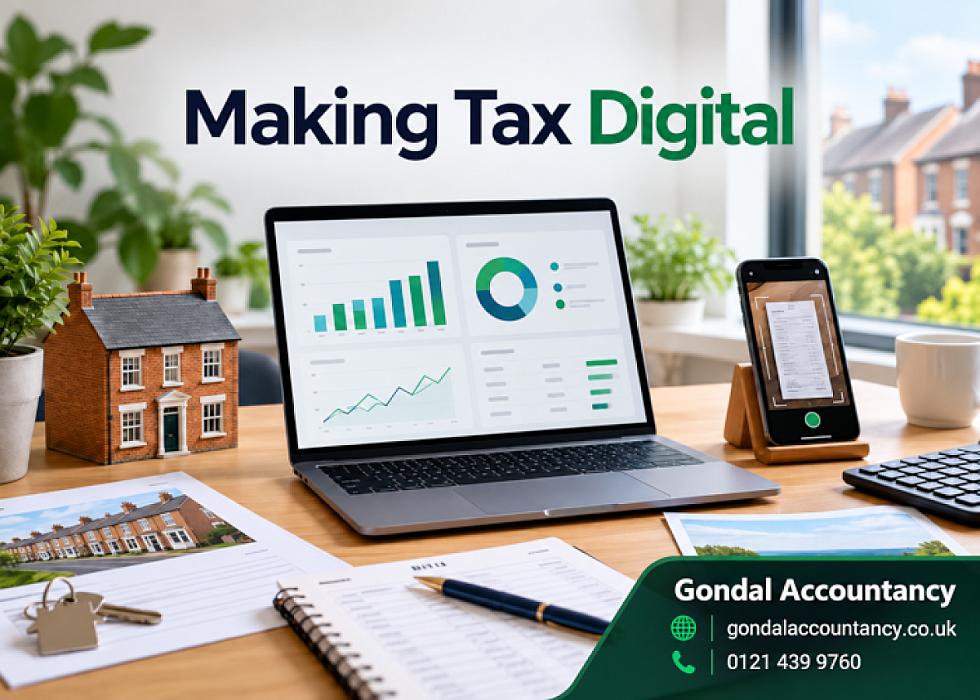
Making Tax Digital for Income Tax is now an important issue for many landlords and self-employed people. If you earn income from property, self-employment, or both, you may need to keep digital records and send quarterly updates to HMRC using compatible software.
For many people, the confusing part is not the idea of digital records. It is knowing whether the rules apply, what income counts, which software to use and how to keep records organised during the year.
Gondal Accountancy helps landlords, drivers, sole traders, ecommerce sellers and small businesses prepare for Making Tax Digital in a practical way.
What is Making Tax Digital?
Making Tax Digital, often shortened to MTD, is HMRC’s system for keeping tax records digitally and reporting income and expenses through compatible software.
For Income Tax, MTD affects many sole traders and landlords. Instead of leaving records until the Self Assessment deadline, people within MTD need to keep digital records and send quarterly updates during the tax year.
You can read HMRC’s official guidance here: Making Tax Digital for Income Tax.
Who does Making Tax Digital apply to?
MTD for Income Tax is being introduced in stages.
Sole traders and landlords with qualifying income over £50,000 have been required to use Making Tax Digital from April 2026. The rules extend to qualifying income over £30,000 from April 2027 and over £20,000 from April 2028.
HMRC explains that qualifying income is generally your gross income from self-employment and property before expenses. That means the test is based on turnover, not profit. You can check the official guidance here: Work out your qualifying income for Making Tax Digital.
This matters because someone may be over the MTD threshold even if their take-home profit is much lower after expenses.
Why landlords should prepare early
Landlords can be affected by Making Tax Digital if their property income, or property income combined with self-employment income, reaches the relevant threshold.
This can include:
- buy-to-let landlords;
- HMO landlords;
- Airbnb and short-term let owners;
- landlords with more than one property;
- landlords who also have self-employed income.
Good property records are important because rental income often includes different types of costs, such as repairs, insurance, letting agent fees, service charges, mortgage interest and replacement domestic items.
Preparing early makes it easier to keep evidence, organise property expenses and avoid a rush when updates are due.
Why taxi and private-hire drivers should check their position
Taxi, private-hire and delivery drivers can also be affected by MTD because the threshold is based on gross income before expenses.
This may include:
- taxi drivers;
- private-hire drivers;
- Uber drivers;
- Bolt drivers;
- Veezu drivers;
- courier drivers;
- food delivery drivers;
- Amazon Flex, DPD and Evri drivers.
A driver may have high gross income but much lower profit after fuel, insurance, repairs, vehicle rental, licence fees, platform commission and other costs.
If MTD applies, it is not enough to gather everything once a year. You will need a regular record-keeping process that keeps income, mileage and expenses organised.
Ecommerce sellers and online businesses
Amazon, eBay, Shopify, Etsy, TikTok Shop and WooCommerce sellers should also check whether MTD applies if they trade as sole traders.
Ecommerce records can be more complicated than normal bookkeeping because your bank deposits may not show the full sales figure. Marketplace fees, refunds, stock, advertising costs, payment processors and VAT treatment all need to be recorded properly.
For Amazon sellers, the gross sales figure can be much higher than the amount received in the bank after fees and deductions. This can affect whether MTD applies.
What records should you keep?
If MTD applies to you, you will need digital records of your income and expenses. HMRC says taxpayers within MTD must use compatible software to keep digital business records and send quarterly updates. You can read the quarterly update guidance here: Making Tax Digital quarterly update direction.
Useful records include:
- sales income;
- rental income;
- platform income;
- mileage logs;
- bank transactions;
- invoices and receipts;
- business expenses;
- property expenses;
- vehicle costs;
- stock records;
- marketplace reports.
Keeping records up to date during the year makes each quarterly update easier and reduces the chance of missing information.
Does Making Tax Digital replace Self Assessment?
Making Tax Digital changes how records and updates are submitted, but it does not remove the need to finalise your tax position properly.
You still need accurate year-end figures. You still need to make sure income, expenses, allowances and tax claims are correct. The quarterly updates are not a full tax return by themselves.
This is where an accountant can help. A good MTD process should make your records easier during the year and your final tax position clearer at the end.
How Gondal Accountancy can help
Gondal Accountancy helps landlords, sole traders, drivers, ecommerce sellers and small businesses prepare for Making Tax Digital.
We can help you:
- check whether MTD applies to you;
- review your current records;
- choose suitable accounting software;
- organise income and expenses digitally;
- prepare for quarterly updates;
- improve bookkeeping before deadlines;
- keep VAT, payroll and Self Assessment records aligned;
- avoid last-minute pressure.
If you are unsure whether MTD applies, the best first step is to review your income sources and current record-keeping.
Speak to a Making Tax Digital accountant in Birmingham
Gondal Accountancy is based in Hall Green, Birmingham, and supports clients across Birmingham, Solihull, the West Midlands and the UK.
If you are a landlord, driver, sole trader or ecommerce seller and want to prepare for Making Tax Digital, visit our service page:
[Making Tax Digital Accountants Birmingham](/making-tax-digital-accountants)
Or call Gondal Accountancy on 0121 439 9760 to book a free consultation.
FAQs
Does Making Tax Digital apply to landlords?
Yes, it can apply to landlords where property income, or property income combined with self-employment income, reaches the relevant threshold.
Does Making Tax Digital apply to taxi drivers?
Yes, it can apply to taxi and private-hire drivers if their self-employed income reaches the relevant threshold.
Is MTD based on profit?
No. HMRC looks at qualifying income before expenses. This is usually gross income or turnover.
Does PAYE salary count towards MTD qualifying income?
PAYE salary is not normally counted as self-employment or property qualifying income for MTD. The main focus is gross income from self-employment and property.
Can an accountant deal with Making Tax Digital for me?
Yes. An accountant can help check whether MTD applies, set up software, organise records and support the reporting process.
Disclaimer
The content of this blog is provided for general information purposes only and should not be treated as tax, accounting, legal or financial advice. Tax rules, accounting requirements, legislation, regulations and official guidance can be complex and may change over time. As a result, some information in this article may become outdated, incomplete or no longer applicable after the date of publication.
The application of any tax, accounting or legal rule will depend on your individual or business circumstances. Before making any decision or taking any action based on the information in this article, you should seek advice from a suitably qualified tax professional, accountant, solicitor or financial adviser.
Gondal Accountancy and its staff accept no responsibility or liability for any loss, action taken, or decision made or not made as a result of relying on the information contained in this blog.