Capital Gains Tax: When Must You Report It to HMRC? Five Common Cases
A simple guide to selling property, shares, cryptocurrency, valuable possessions and gifted assets
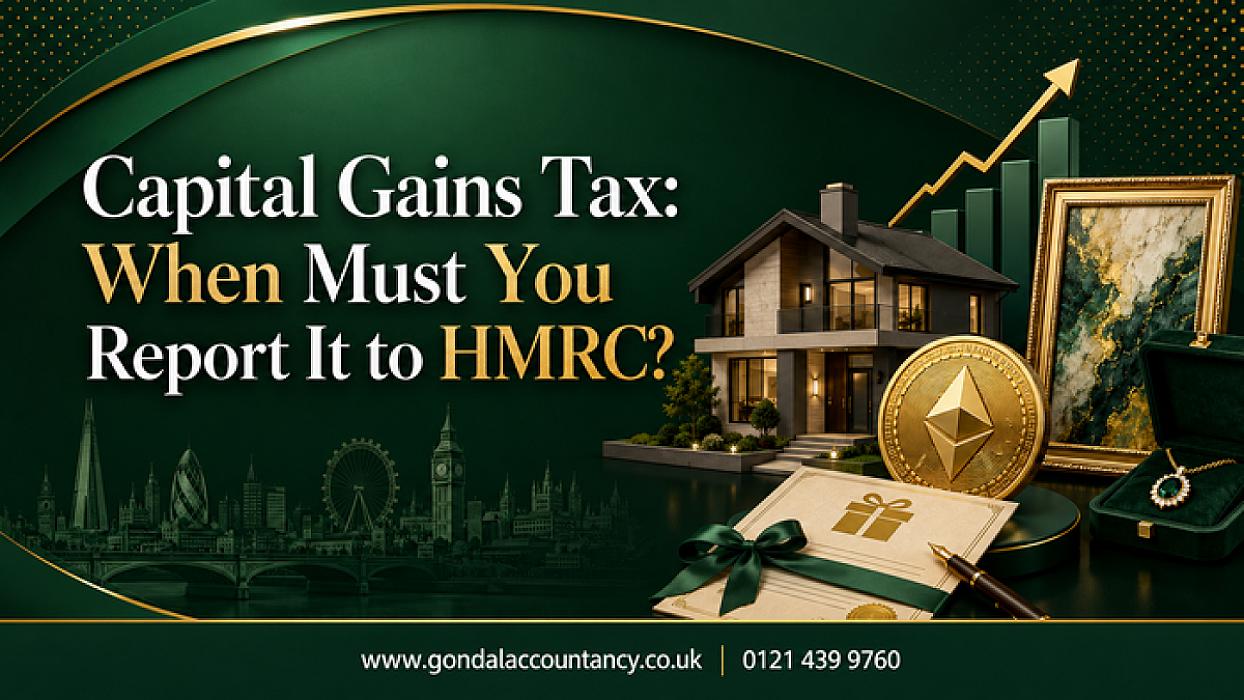
Capital Gains Tax may apply when you sell, transfer or give away an asset that has increased in value. It is normally the profit—the capital gain—that matters, rather than the total amount received.
Here are five common situations in which you may need to report a capital gain to HMRC.
1. Selling a second property or buy-to-let property
Capital Gains Tax may apply when you sell:
- A second home
- A buy-to-let property
- An inherited property
- A property that has not always been your main residence
Where Capital Gains Tax is payable on the sale of UK residential property, it must normally be reported and paid within 60 days of completion. HMRC property reporting guidance
2. Selling shares or investments
You may need to report a gain when selling shares held outside an ISA or PEP.
The calculation may consider the purchase price, sale proceeds, transaction costs, capital losses and available tax-free allowance. Special rules can apply where shares in the same company were purchased at different times.
3. Selling or exchanging cryptocurrency
A taxable disposal may happen when you:
- Sell cryptocurrency for money
- Exchange one cryptocurrency for another
- Use cryptocurrency to buy goods or services
- Give cryptocurrency to someone other than your spouse, civil partner or a charity
Exchanging one cryptoasset for another can create a reportable gain even if no money is withdrawn to a bank account. HMRC cryptoasset guidance
4. Selling valuable personal possessions
Capital Gains Tax may apply when you sell certain personal possessions for £6,000 or more, including:
- Jewellery
- Artwork
- Antiques
- Collectables
- Valuable furniture
Private motor cars are generally exempt, but different rules may apply to other valuable possessions.
5. Giving property or assets to someone
Giving away an asset can still count as a disposal for Capital Gains Tax purposes, even when no money is received.
This may apply when giving:
- Property to children or relatives
- Shares to another person
- Land or business assets to family members
- Part of a jointly owned asset to someone else
Gifts between spouses or civil partners who are living together are generally treated differently, and certain tax reliefs may be available.
When must other capital gains be reported?
For gains that do not involve UK residential property, you may normally report them through:
- Your Self Assessment tax return; or
- HMRC’s Capital Gains Tax reporting service, where eligible
You generally need to report and pay Capital Gains Tax when your taxable gains exceed the annual tax-free allowance. If you already complete Self Assessment, additional reporting may also be required where the total disposal proceeds exceed HMRC’s reporting threshold—even if the taxable gain is below the allowance. HMRC reporting rules
Need help reporting a capital gain?
Capital Gains Tax calculations can become complicated where an asset was jointly owned, inherited, gifted, improved or used for different purposes.
Gondal Accountancy can help you calculate the gain, review available expenses and reliefs, and report the disposal correctly to HMRC.
This article provides general information only. Please obtain professional advice based on your circumstances.
Disclaimer
The content of this blog is provided for general information purposes only and should not be treated as tax, accounting, legal or financial advice. Tax rules, accounting requirements, legislation, regulations and official guidance can be complex and may change over time. As a result, some information in this article may become outdated, incomplete or no longer applicable after the date of publication.
The application of any tax, accounting or legal rule will depend on your individual or business circumstances. Before making any decision or taking any action based on the information in this article, you should seek advice from a suitably qualified tax professional, accountant, solicitor or financial adviser.
Gondal Accountancy and its staff accept no responsibility or liability for any loss, action taken, or decision made or not made as a result of relying on the information contained in this blog.